
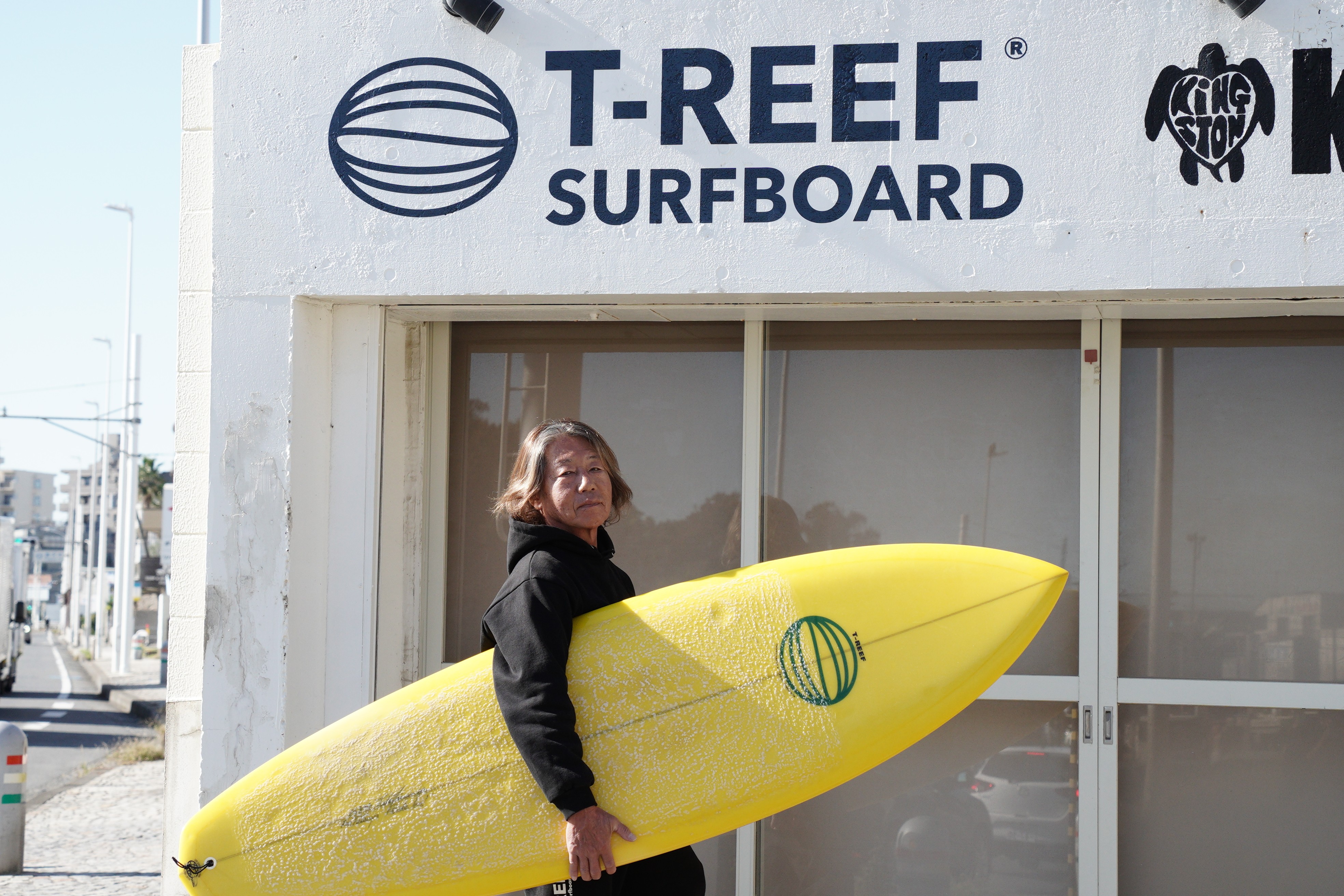
Why T-REEF Surfboard Recommends Making Your Board in Winter
Tips
Feb 11, 2026
Why T-REEF Surfboard Recommends Making Your Board in Winter
POV from maker’s perspective
Surfboard making is not a world reserved only for professionals or experts.
With the right timing and a bit of knowledge, we believe any surfer can make better choices and get closer to a truly good board.
In this article, we share what we’ve learned through daily work at the shaping room.
Organized clearly and simply, like a small guidebook from the shapers side.
First, what’s the difference between stock boards and custom boards?
Stock surfboards have clear advantages:
They’re easy to purchase
Designed to suit a wide range of surfers
Available year-round
Custom-ordered boards, on the other hand, are shaped based on:
Your body type and surfing experience
The wave conditions at your regular spots
Your current level and future goals
Because every step—from design to finishing—is adjusted,
when and under what conditions the board is made matters much more.
“Winter is the off-season” doesn’t mean “bad for shaping”
Winter is often seen as the surfing off-season.
But from a board maker’s point of view, it’s actually one of the best seasons to build boards.
The reason is simple:
Surfboard production is highly affected by its environment.
1. More stable quality in winter
In surfboard production, especially during:
Glassing (resin work)
Curing and drying
temperature and humidity play a crucial role.
Polyester resin generally cures most stably at:
Around 25°C (77°F)
Low humidity
Winter makes it easier to control these conditions inside the factory and reduces the influence of outside air.
As a result, boards tend to have more consistent quality with fewer imperfections.
This leads to differences in:
Strength
Durability
Resistance to deck dents (foot marks)
all important factors for long-term use.
2. Enough time to let the board “settle”
A surfboard doesn’t fully stabilize the moment it’s finished.
It performs best after some resting time.
As a general guideline:
PU foam: about 3 months
EPS foam: about 3–4 weeks
Allowing this time helps:
Strengthen the board core
Create a more stable ride feel
Starting in winter makes it easier to secure this time before the season begins.
3. More room for careful work
Most surfers place orders in spring or summer.
In winter, glassing factories are usually less busy, which means:
More flexible schedules
More time for fine adjustments
Careful final checks and finishing
This extra margin allows boards to be completed calmly and precisely.
4. Ready to ride at the start of the season
Boards shaped in winter and properly cured are ready for:
Clean spring waves
Small summer conditions
Powerful autumn swells
They’re easier to handle and less temperamental across seasons.
This isn’t a special trick—it’s simply the result of choosing the right timing.
Conclusion: Winter is a season to spend time with your surfboard
For these reasons, T-REEF Surfboard recommends making your board in winter.
Just like surfing itself, learning a little about how boards are made changes how you enjoy them.
When boards are finished, we often hear our riders say things like:
“I want to ride it right away, but it’s so beautiful I want to display it first.”
“During the curing period, having a drink while looking at the board is the best part.”
Even when you’re not surfing as much, winter offers a different way to enjoy surf culture—
by waiting, watching, and connecting with your board.
Winter is also an ideal season to join a shaping workshop:
You can work without rushing
Focus on learning and hands-on shaping
Prepare properly for the coming season
If you’ve ever thought, “Someday I’d like to make my own board,”
winter might be the perfect place to start.
By the time the new season arrives,
that board will surely feel like something special.
WANT TO ORDER YOUR BOARD?
T-REEF Surfboard のボードは、すべてフルハンドシェイプ。
あなたの
✔️ サーフスタイル
✔️ 体格
✔️ 目指すライディング
に合わせて、ゼロから設計します。


